Prop Trading for Beginners vs Experienced Traders
Beginners often focus on fast results, while experienced traders focus on consistency. That difference shapes long-term performance and account survival.
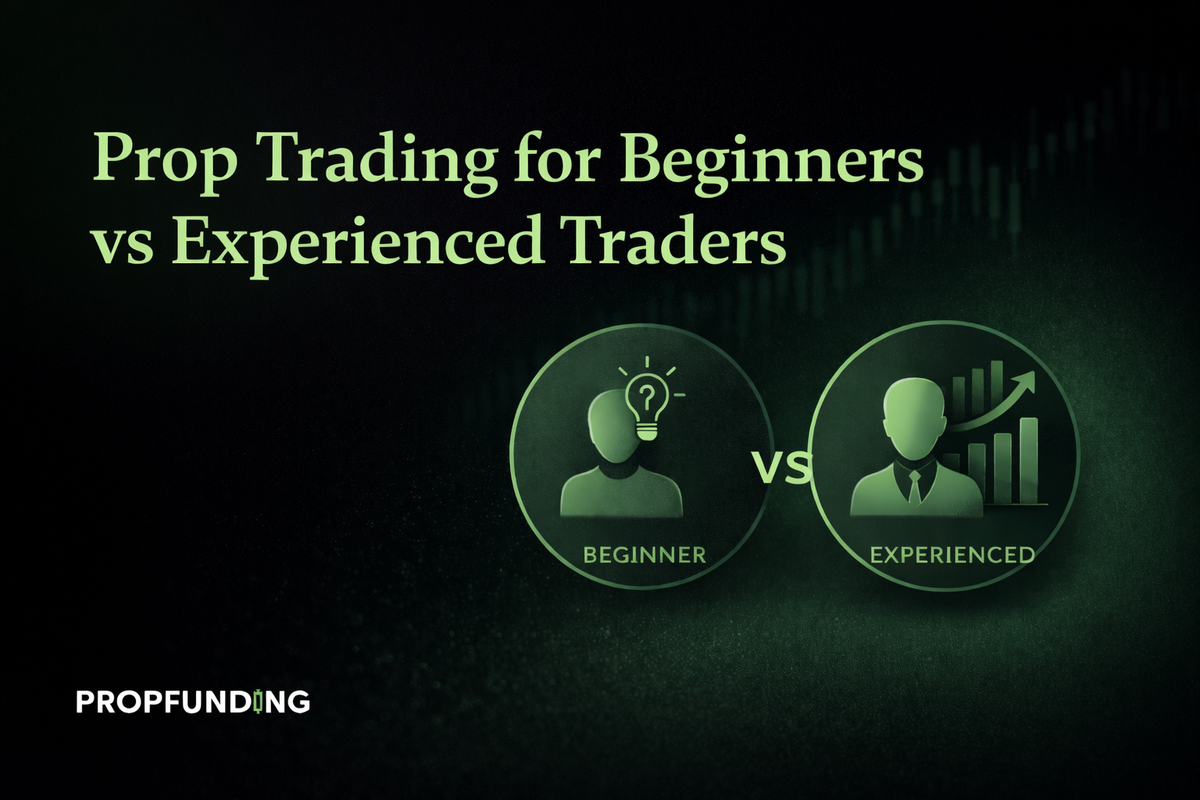
Prop trading for beginners vs experienced traders shows clear differences in mindset, risk control, and execution. Beginners often focus on fast results, while experienced traders focus on consistency. That difference shapes long-term performance and account survival.
Understanding the starting point
Beginners usually enter prop trading to pass the challenge quickly. As a result, they may take more trades than needed and risk too much on single positions. In many cases, they focus more on reaching the target than on trading well.
Experienced traders approach prop trading in a different way. They focus on process first. They follow a plan, wait for clear setups, and avoid rushing into trades. Because of this, they often make more stable decisions from the start.
Risk management differences
Risk control is one of the biggest gaps in prop trading for beginners vs experienced traders. Beginners often increase risk after losses because they want to recover quickly. In many cases, this leads to hitting daily drawdown or maximum loss limits.
Experienced traders keep risk stable. They use planned position sizes and accept that losses are part of trading. As a result, they protect their accounts and give themselves more time to perform well.
Reaction to losses
Beginners often react emotionally after a losing trade. For example, they may enter another position too quickly in an attempt to recover. This is known as revenge trading, and it often leads to more losses.
Experienced traders respond with more control. They review the trade, check whether they followed the plan, and then move on. Because of this, they avoid turning one loss into a larger problem.
Handling winning streaks
Winning can also create problems for newer traders. After a few successful trades, beginners may feel overconfident. Therefore, they may increase position size or start taking weaker setups. This often leads to giving back profits.
Experienced traders stay disciplined during winning periods. They continue to follow the same rules and avoid chasing more trades just because they are ahead. That helps them protect gains and stay consistent.
Strategy and execution
Beginners often change strategies too often. After a few losses, they may switch systems, change indicators, or abandon a method before testing it properly. As a result, they never build real consistency.
Experienced traders stay with one system long enough to judge it properly. They track results, review performance, and make small adjustments when needed. Instead of changing everything, they improve execution.
Trade selection
Beginners usually take more trades. In many cases, they enter without enough confirmation or take setups that do not fully match their plan. This increases risk and lowers trade quality.
Experienced traders are more selective. They wait for setups that meet their conditions and ignore weaker opportunities. Because of this, they often take fewer trades, but the overall quality is higher.
Dealing with prop firm rules
Prop firm rules can feel difficult for beginners. Daily loss limits, total drawdown rules, and profit targets often create pressure. As a result, beginners may force trades or take extra risk just to move faster.
Experienced traders treat these rules as part of the environment. They plan their trades within those limits and adjust their pace when needed. Therefore, they reduce the chance of losing the account due to avoidable mistakes.
Evaluation vs funded stage
Beginners often trade more aggressively during the evaluation phase. They want to pass fast, so they push harder than they should. However, once they reach a funded account, they often struggle to adjust.
Experienced traders stay consistent in both stages. They use the same approach during the challenge and after funding. This creates steadier results and makes account management easier over time.
Psychology differences
The mental side is a major factor in prop trading for beginners vs experienced traders. Beginners are more likely to react to short-term outcomes. One loss can affect the next trade, and one win can create overconfidence.
Experienced traders stay calmer and focus on execution. They do not let one result define the next decision. Because of this, they are better able to avoid emotional trading and stay aligned with their strategy.
Growth and long-term results
Long-term success in prop trading depends on consistency. Beginners often chase quick gains, but that approach rarely lasts. Experienced traders focus on preserving capital, following rules, and building steady performance over time.
When a business grows, it also means increasing revenue and income. In trading, that growth comes from discipline, controlled risk, and the ability to stay funded long enough to benefit from steady performance.
Final thoughts
Prop trading for beginners vs experienced traders comes down to behavior under pressure. Beginners often struggle with emotions, overtrading, and unstable risk. Experienced traders focus on discipline, patience, and clear execution.
In the end, long-term success does not come from moving fast. It comes from trading with control and repeating good decisions over time.