Risk Management Prop Firm Challenge
Learn risk management for prop firm challenges—drawdown rules, daily loss limits, sizing, discipline, and habits that help traders pass and protect funded accounts.
Risk management prop firm challenge preparation is the most important skill a trader can learn before stepping into a funded account evaluation. Prop firms offer capital access and payout splits, but they demand tight discipline, small risk, and consistent execution. Many skilled traders fail evaluations not because they misread charts, but because they ignore risk rules or trade too aggressively. Understanding how risk management influences every decision is the roadmap to passing a challenge and securing a funded account.
Prop Firm Evaluations Reward Survival First
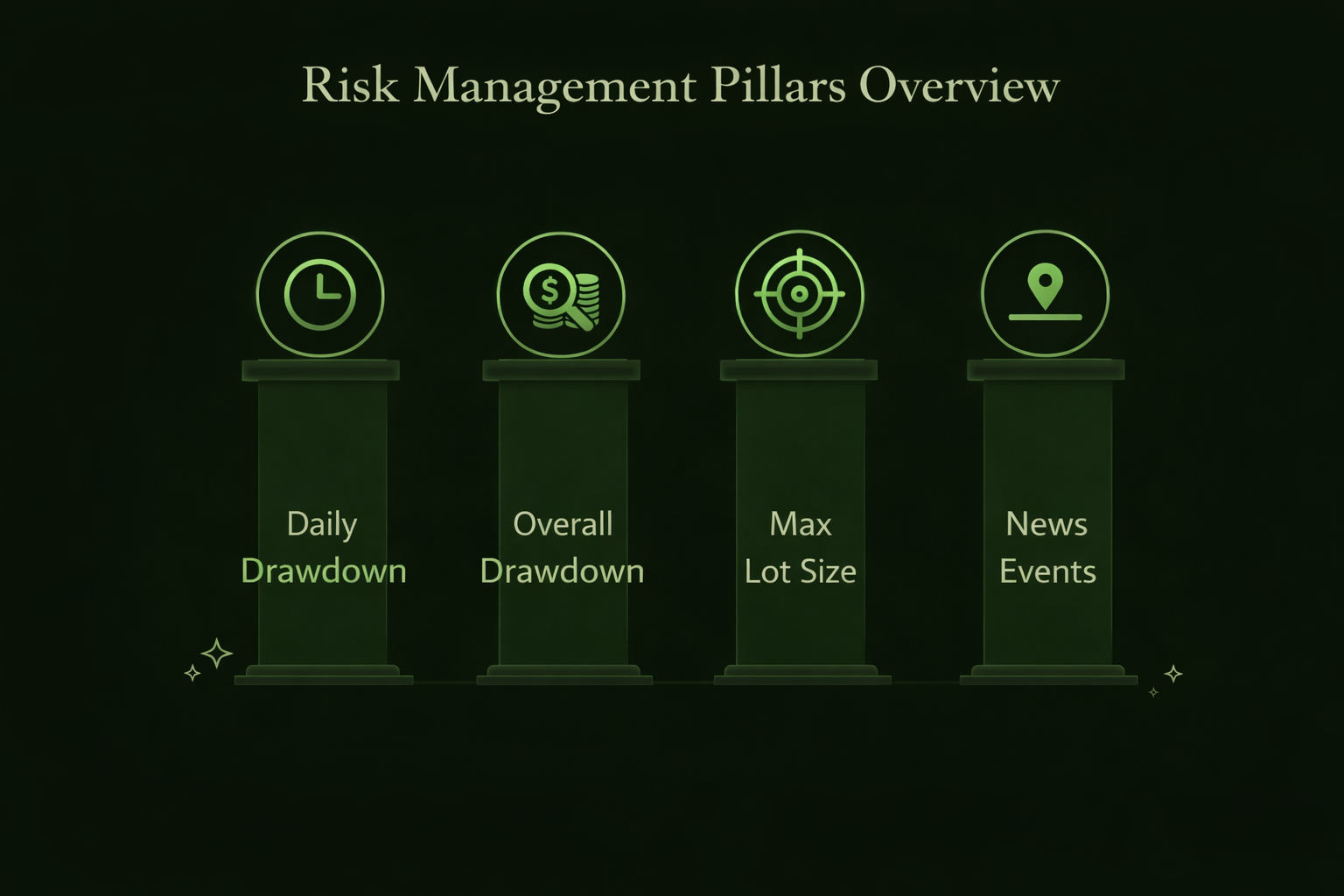
Prop firm rules are designed so that only disciplined traders move forward. Key limits include:
• Maximum total drawdown
• Daily loss boundaries
• Position size guidelines
• Account scaling stages
• News restrictions
• Product or contract limits
• Time-based trading rules (sessions, overlap, overnight)
These limits exist to prevent reckless behavior. A trader who treats the evaluation like a race often ends it quickly. A trader who treats it like a marathon gives themselves time to let their edge play out.
Success is not about winning fast. It is about not losing fast.
Understanding Drawdown and Account Limits
Drawdown rules control how much the account can lose before it terminates.
Total Drawdown
This is the absolute line a trader cannot cross.Example:100,000 account → 90,000 minimum balance. Once the balance touches that level, the evaluation resets.
Daily Loss Limits
Daily restrictions often catch traders off guard. A trader may still be far above total drawdown but fail because one session dips too far.
Daily caps protect emotions. Once the limit is tested, the smartest move is to stop until the next trading day.
Equity vs Balance Tracking
Some firms track drawdown off equity, meaning floating losses count. Others use balance only.
This distinction changes everything. Equity-based drawdown requires quicker cutting of losers.
Risk Per Trade Strategy
Before any challenge begins, a trader should decide how much risk they are willing to take per position.
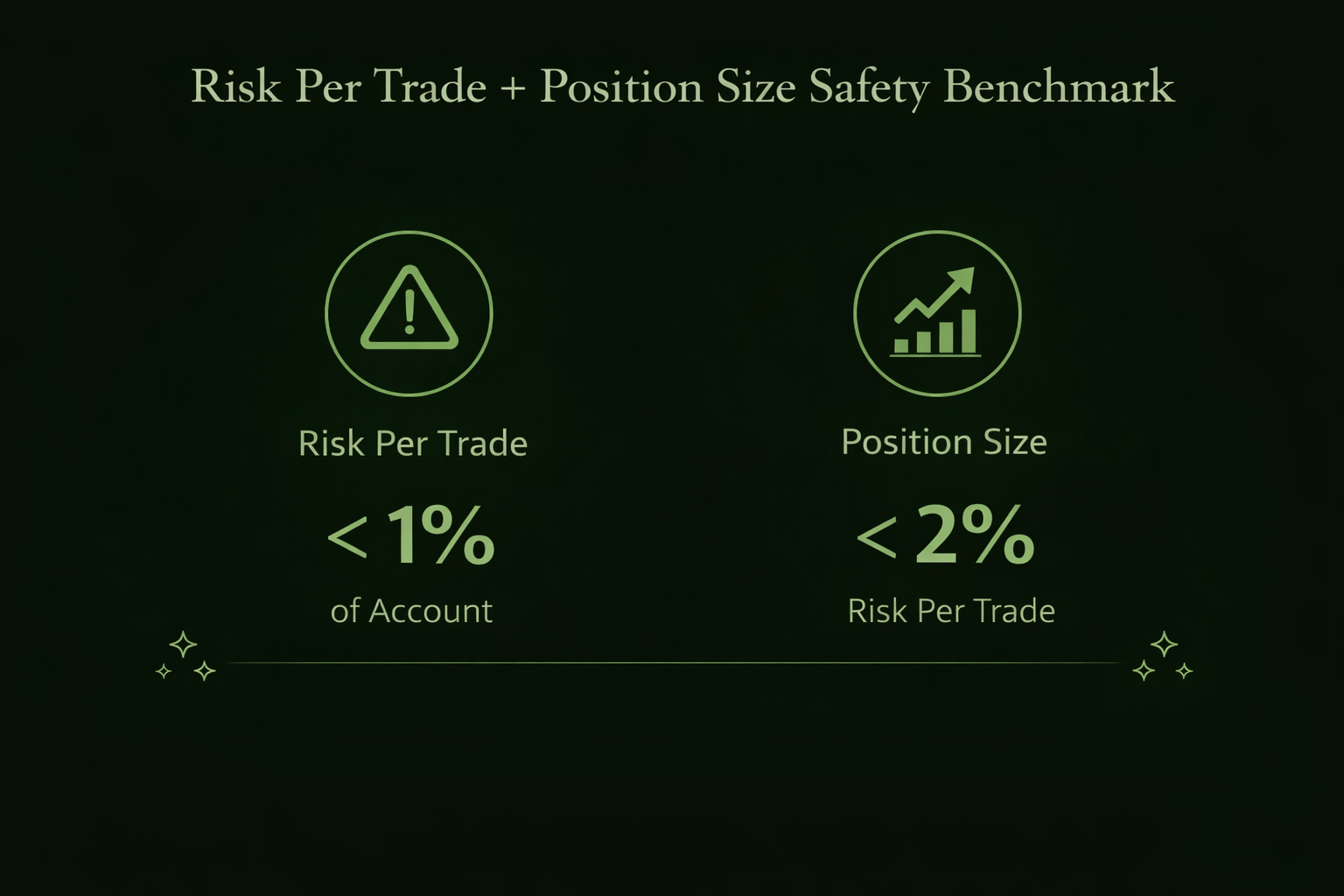
Typical ranges that help traders stay safe:• 0.25%–0.50% per trade• Rarely more than 1%• Lower risk after mistakes• Slight increase only near the finish when close to the target
Risk management is about staying alive, not maximizing each win.
A trader can be wrong many times with small position sizes and still pass the challenge. One oversized loss can reset everything.
Position Sizing to Protect the Account
Sizing determines how much a wrong idea costs. Good position sizing:
• Uses preset stop distances
• Adjusts to volatility
• Stays steady across sessions
• Does not expand during losing streaks
Many traders who struggle with consistency are not wrong in direction. They simply risk too much on each idea.
A trader who sizes small can weather a string of losses and recover. A trader who sizes too large needs a perfect streak to survive.
Quality Over Quantity Prevents Overtrading
Overtrading destroys more challenge accounts than bad analysis.
Warning signs include:
• Taking trades outside your plan
• Trading simply because the market is open
• Revenge trading to recover a loss• Entering without confluence
Risk management says no more than it says yes. A trader who waits for their setups is more likely to pass than someone who tries to trade every move.
Define When to Stop Trading for the Day
Stopping is part of discipline.
Good stopping rules:
• Two losses → pause or end the day
• One large mistake → exit session
• Hitting 50% of the daily limit → protect the remaining room
• Losing emotional control → walk away
Prop challenges expose emotion quickly. Stopping early protects the account and the trader’s mindset.
Winning traders know when to exit. Not just positions, but entire trading days.
Build a Clear Trading Framework
A written plan helps traders avoid emotional reactions.
A complete plan outlines:
• Which markets are traded
• What time of day are entries taken
• Entry criteria (trend continuation, breakout, pullback)
• Stop placement method• Profit target style
• Daily win and loss caps• Maximum number of trades
• Rules for trade selection• Personal no-trade zones (low volume, chop, lunch periods)
Risk management becomes simple when you follow the same rules every session.
Timing and Market Behavior Awareness
Market rhythm affects risk.
Examples:
• Open volatility requires tight control
• Mid-session chop calls for reduced size or no trading
• Closing hour can create unpredictable spikes• News releases create large slippage risk
Knowing when not to trade can be more valuable than knowing when to trade.
Risk management supports patience. Not constant activity.
News and Event Management
A single position left open through the news can invalidate an entire month of work.
Good habits:• Check the calendar every morning• Avoid positions right before high-impact events• Reduce the size if holding something open• Do not chase spikes immediately after releases
Many firms also prohibit news trading completely. Breaking the rule, even if the trade wins, ends the evaluation.
The Psychological Side of Risk
Prop challenges bring stress.
Traders face:
• Fear of failure
• Pressure to hit targets
• Temptation to force trades
• Urge to recover quickly after losses
• Anxiety when nearing the finish line
Winning requires emotional balance.
Losses are part of trading. Risk management removes the emotion by limiting exposure.
If each trade risks little, the outcome matters less. This keeps decisions rational.
Respecting the Profit Target Pace
Some traders pass challenges slowly and consistently. Others try to finish as fast as possible and fail.
A better model:• Focus on base hits• Avoid swinging for home runs• See break-even days as progress• Let compounding account credit grow steadily• Trade your structure, not the scoreboard
Funding favors traders who build incremental gains.
Risk Management After Passing the Challenge
The funded stage is a continuation. Not a finish line.
Traders must:• Reduce size to protect their funded account• Withdraw profits regularly• Avoid large-loss days• Maintain discipline• Treat funded capital with care
Many traders pass the challenge and blow the funded account by relaxing their risk rules. Risk principles must remain in place permanently.
Avoid These Common Risk Pitfalls
Top failure triggers include:• Oversized trades• Trading when tired or emotional• Skipping stop losses• Leaving positions open without monitoring• Trading outside your plan structure• Ignoring daily loss rules• Closing rules too late• Expanding risk after a win streak
Awareness and avoidance of these traps give a trader a measurable edge over the average challenger.
Why Risk Management Works Better Than Prediction
Successful prop traders often say risk control matters more than market calls.
Reasons:
• Predicting direction is always uncertain
• Markets can change tone without warning
• Systems go through weak periods
• Smaller losses allow time for winning streaks
• Funding survival requires consistency
Prop firms reward smart management, not bold gambling.
Final Takeaway on Risk Management Prop Firm Challenge
Risk management prop firm challenge success rests on one principle: protect the account first, pursue profit second. With clear position sizing, disciplined daily limits, patient trade selection, avoidance of overtrading, written plans, and emotional stability, traders give themselves the best chance to move from evaluation to funded status. Keep risk small, respect the rulebook, view survival as the priority, and funded payouts shift from possibility to reality.